Recruiters Unite: Why the future of hiring is still human
Charlotte Coetzee
Recruiting has never had more tools at its disposal – and yet, the conversations that matter most still come down to people.
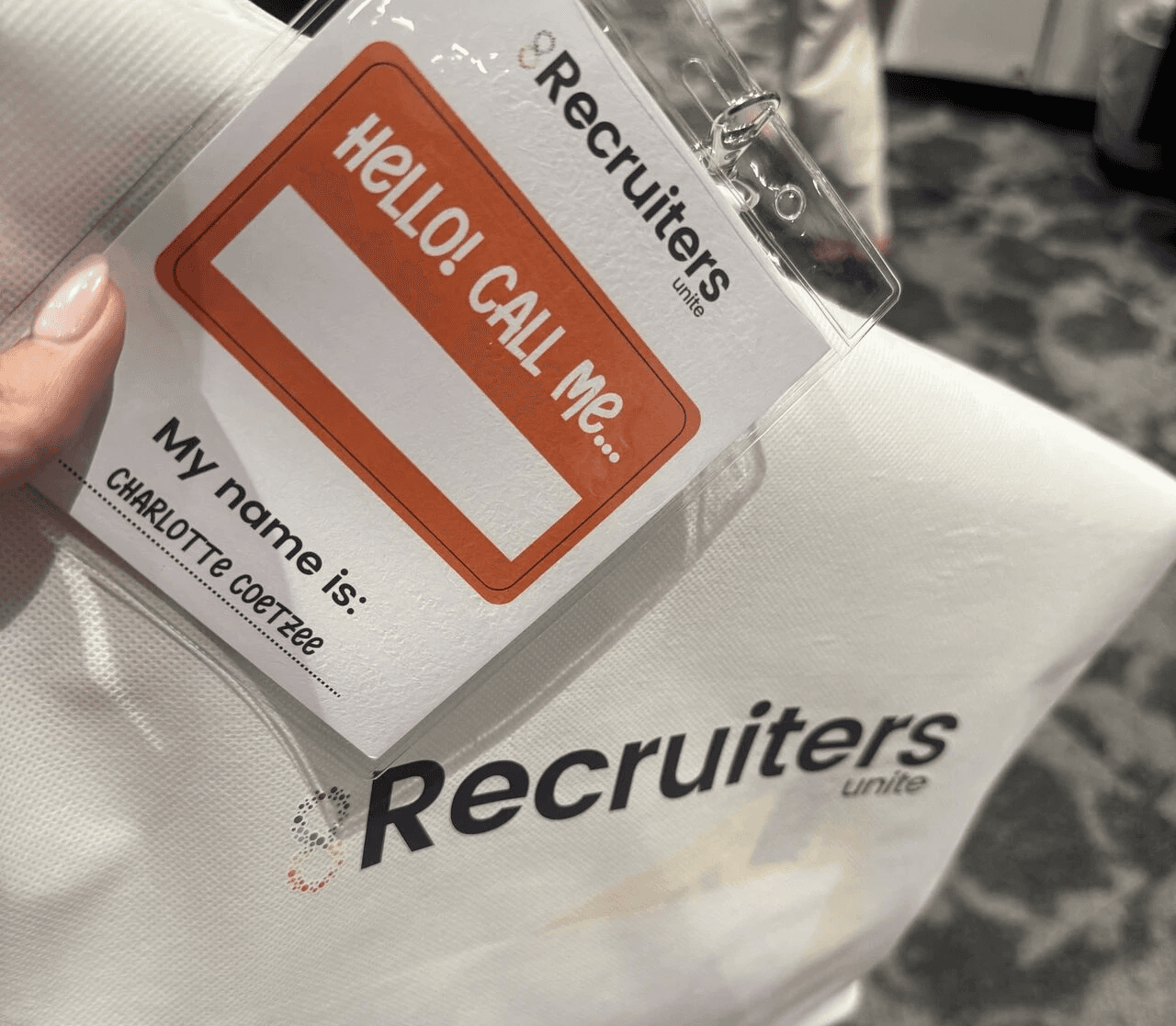
That was the feeling we walked away with after attending Recruiters Unite in Cape Town this month. Not because the industry isn’t changing (it clearly is), but because amid all the talk of automation and AI, the core of the profession feels sharper than ever.
Across the different sessions, there was a clear theme running through the day. Technology, automation and AI are moving quickly into our space, but the role of the recruiter is not disappearing. If anything, it is becoming more defined.
One session that really stuck with us was Vanessa Raath’s talk on AI in recruitment. After sitting through more than 100 AI demos over the past year, her takeaway was refreshingly grounded: AI can handle tasks, but humans handle trust.
That distinction matters. Tools can help us gather market data faster, automate parts of sourcing, or streamline workflows. But influencing hiring managers, understanding candidate motivations, and navigating complex career decisions still require human judgement.
Another perspective came from Marcel van der Meer, who described two possible paths emerging for recruiters. On one side is the Human-Centric recruiter, leaning into empathy, negotiation and influence. On the other is the AI Orchestrator, designing workflows, automating tasks and leveraging data.
The interesting part is that most of us will likely need to operate somewhere between those two worlds.
And then there was a reminder that cut through all the technology talk.
Demetri Demetriou shared a set of “universal recruiting principles” that felt just as relevant today as they were decades ago: activity matters, time kills deals, pipelines and probabilities drive outcomes, and perhaps most importantly – people go to work for people.
It was a useful reminder that while tools and platforms will continue to evolve, recruiting is still fundamentally about connection.
Events like this are valuable not just for the content, but for the conversations they spark. They give us the chance to step back from the day-to-day and think about where our industry is heading, and how we adapt without losing the parts of the profession that make it work.
For us, the takeaway was clear: the recruiters who thrive will be those who combine strong human judgement with smart use of technology.
That balance feels like the future of recruiting.
How are you navigating the intersection of human connection and AI in your work?